Shimeles Abera Foundation
- Client
- Shimeles Abera Foundation
- Industry
- Nonprofit & social programmes
- Year
- 2025
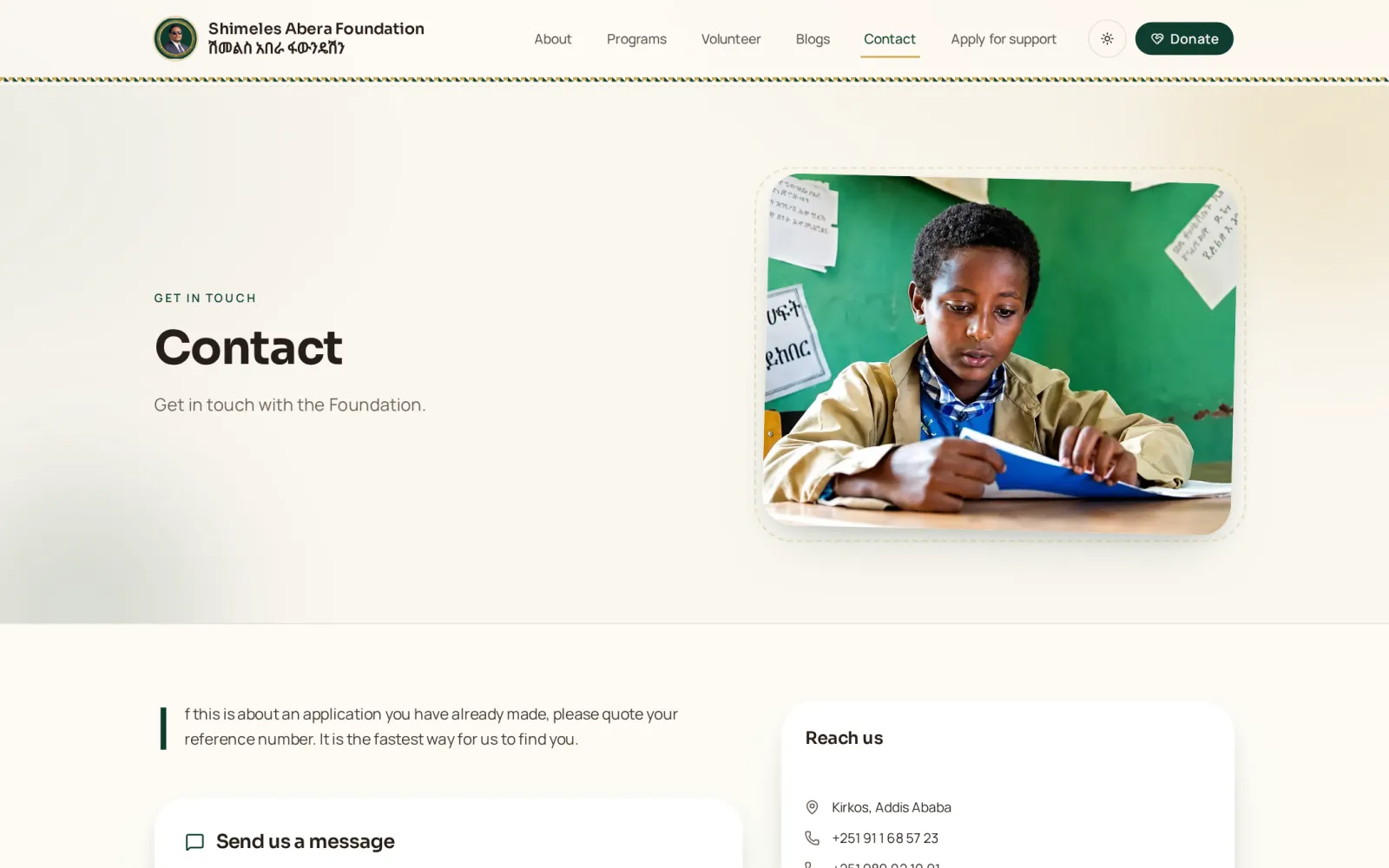
A nonprofit operations system where the public website is one view of the data and the dashboard is where the data lives, built so that nothing a programme manager might want to change next year requires a developer.
Visit the site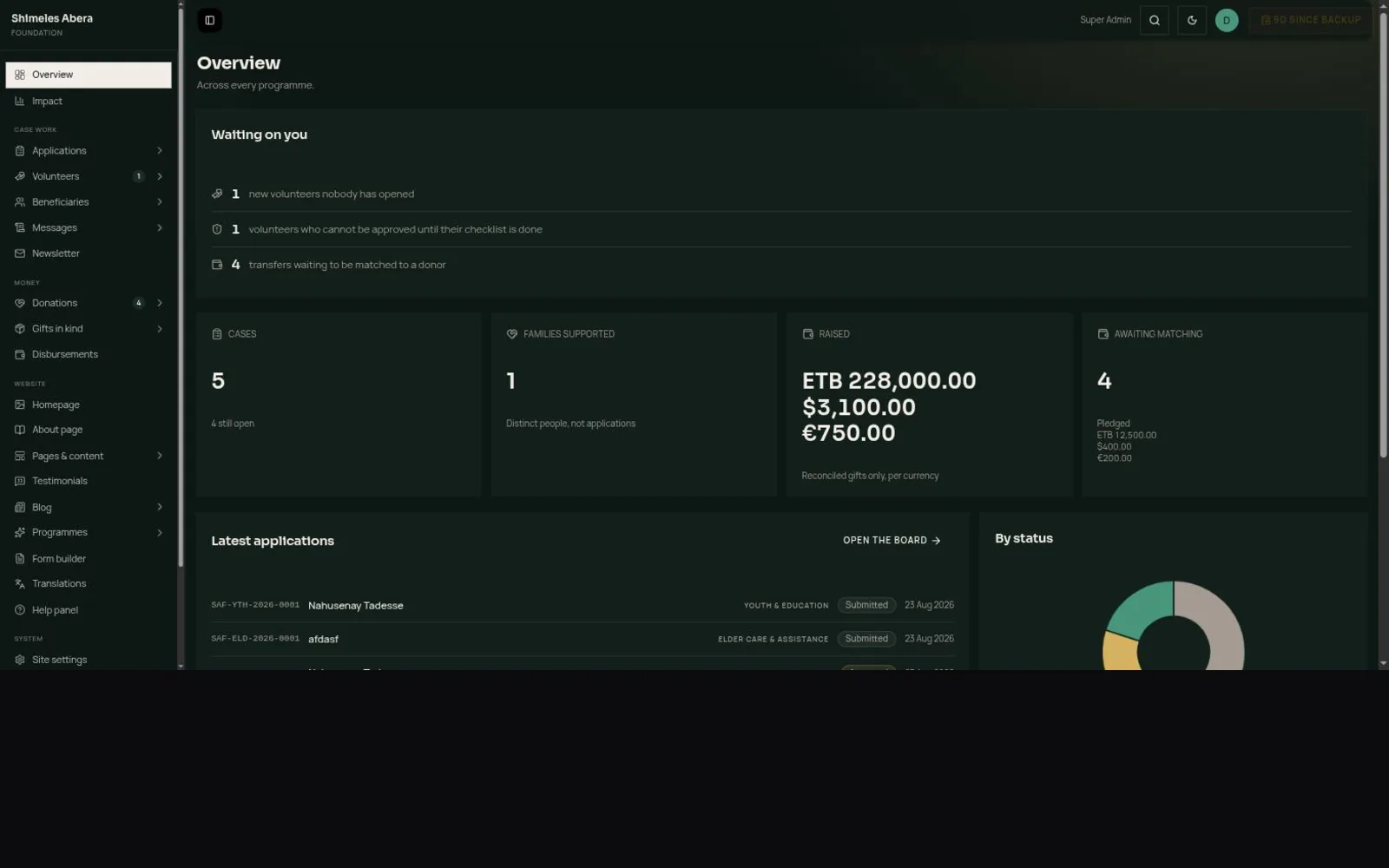
62
Tables behind one editable system
0
Hardcoded strings a manager might want to change
2
Server-side rules that cannot be bypassed
What it covers
- Dynamic form engine
- Beneficiary casework & disbursement
- Donations & recurring pledges
- Volunteer safeguarding workflow
- Pillar-scoped access control
- Fully editable public site
The governing rule
One rule shaped every decision in this build:
Nothing a non-technical Foundation staff member might reasonably want to change is hardcoded.
Not the programme pillars and their colours. Not the page copy. Not the navigation, the footer, the phone numbers, the bank details or the social links. Not the workflow status labels or the order they appear in. Not the questions on a form, or their validation rules. Not the regions, the volunteer skills, the professions, the time slots, or the answers in the help panel. Not even the interface strings, which live in a translations table.
The test applied to every screen: if the programme manager wants to change this next year with no developer involved, can they?
What the Foundation actually does
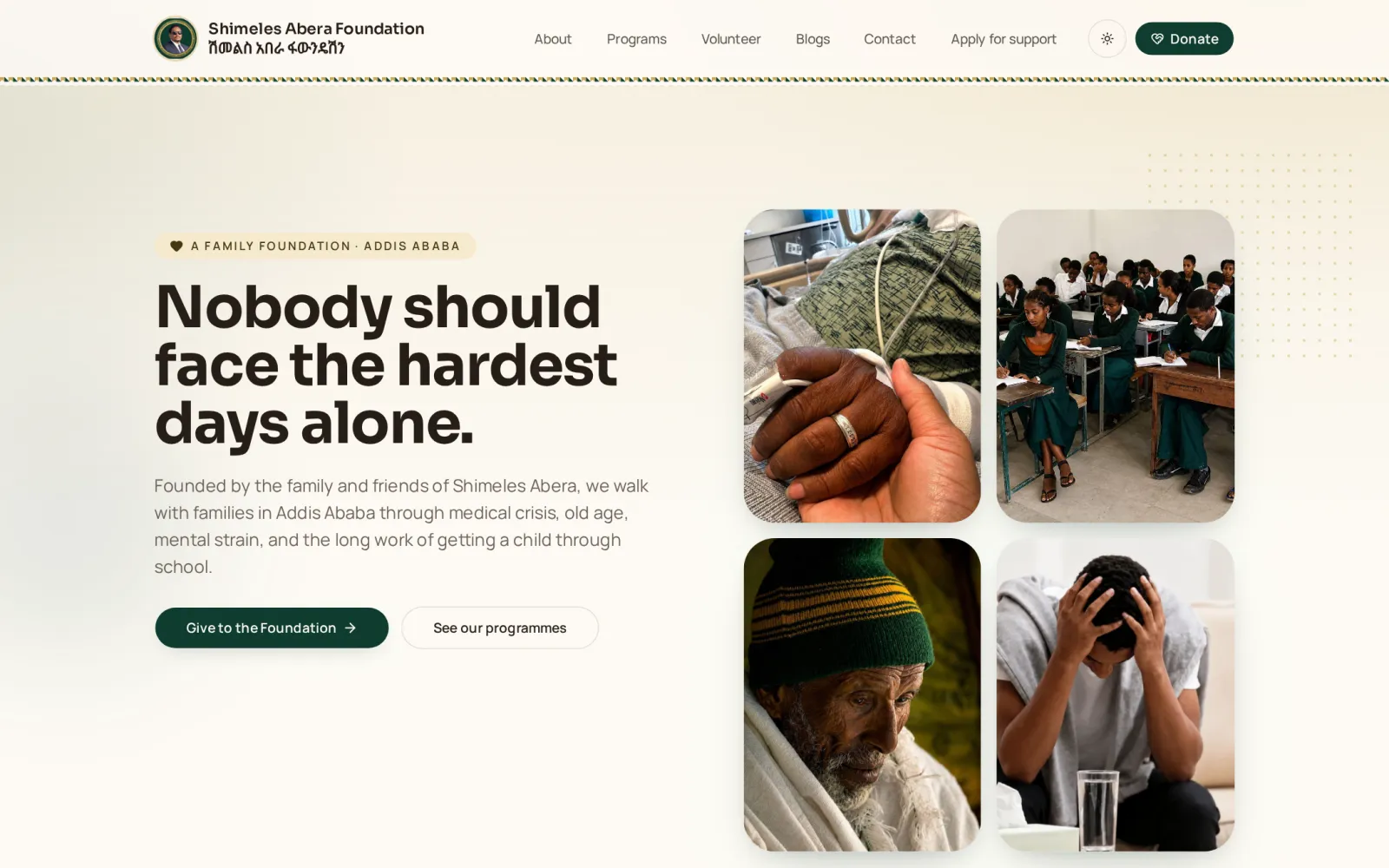
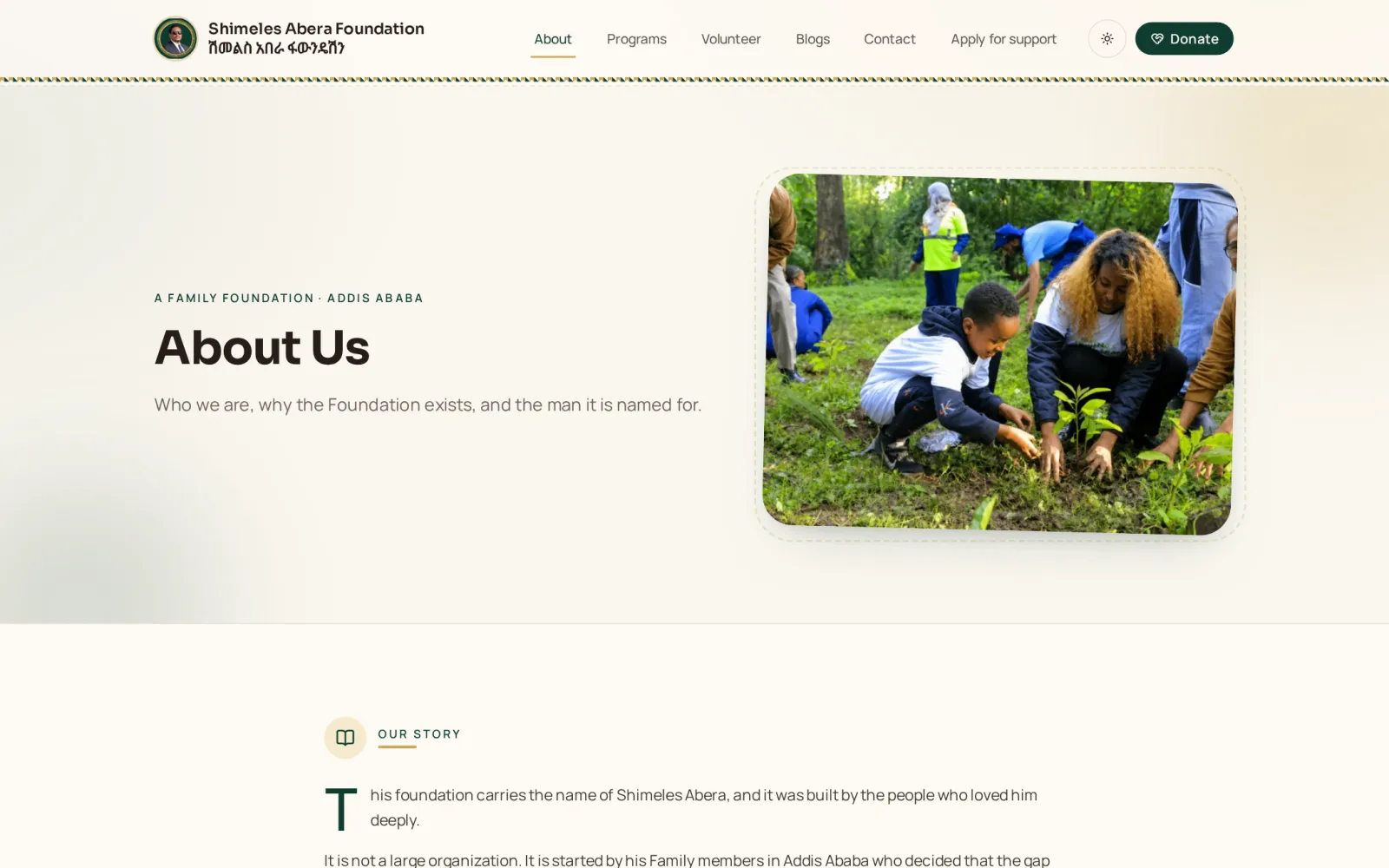
It walks with families in Addis Ababa through medical crisis, old age, mental strain and the long work of getting a child through school. That means intake, assessment, casework and disbursement, and a public face that has to ask strangers for money and for time.
The system
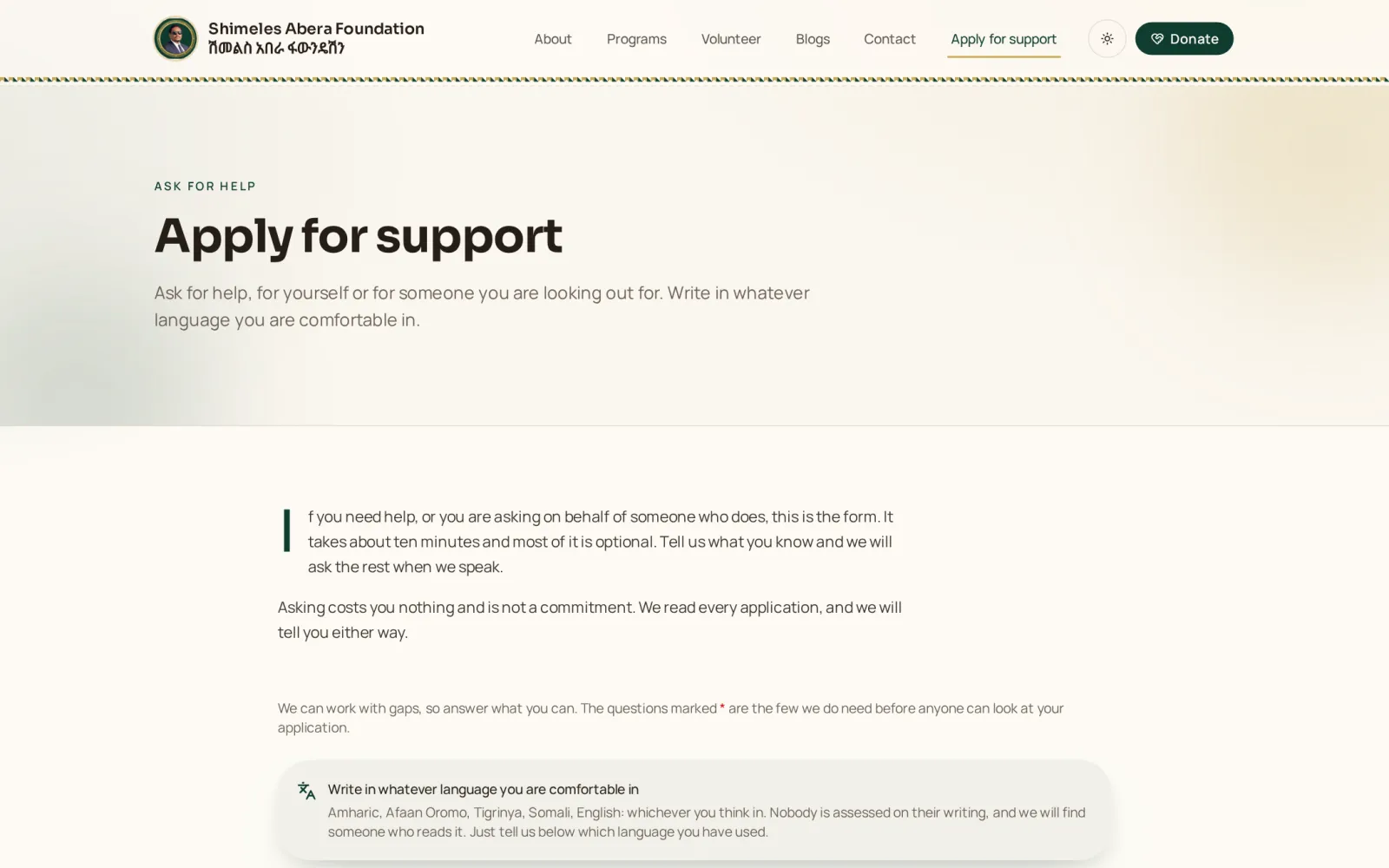
A dynamic form engine. Applications for assistance are not hand-written pages. A form is a row in form_definitions with its questions in form_fields, and one renderer draws it, validates it and files the submission. Adding a new intake form is configuration.
Beneficiary casework. Households, beneficiaries, assessed needs by category, case notes, documents and disbursements, with payment methods and accounts behind them.
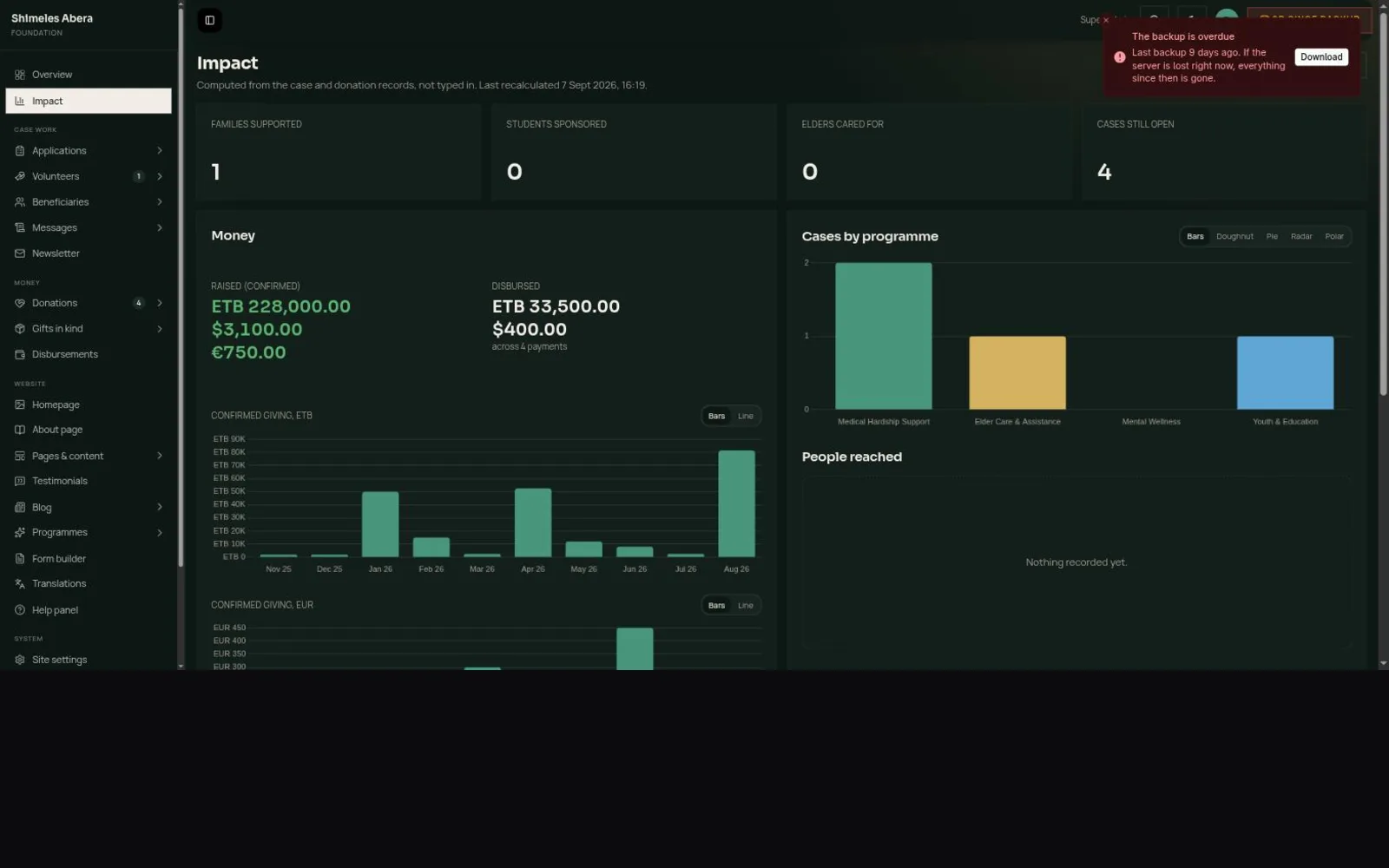
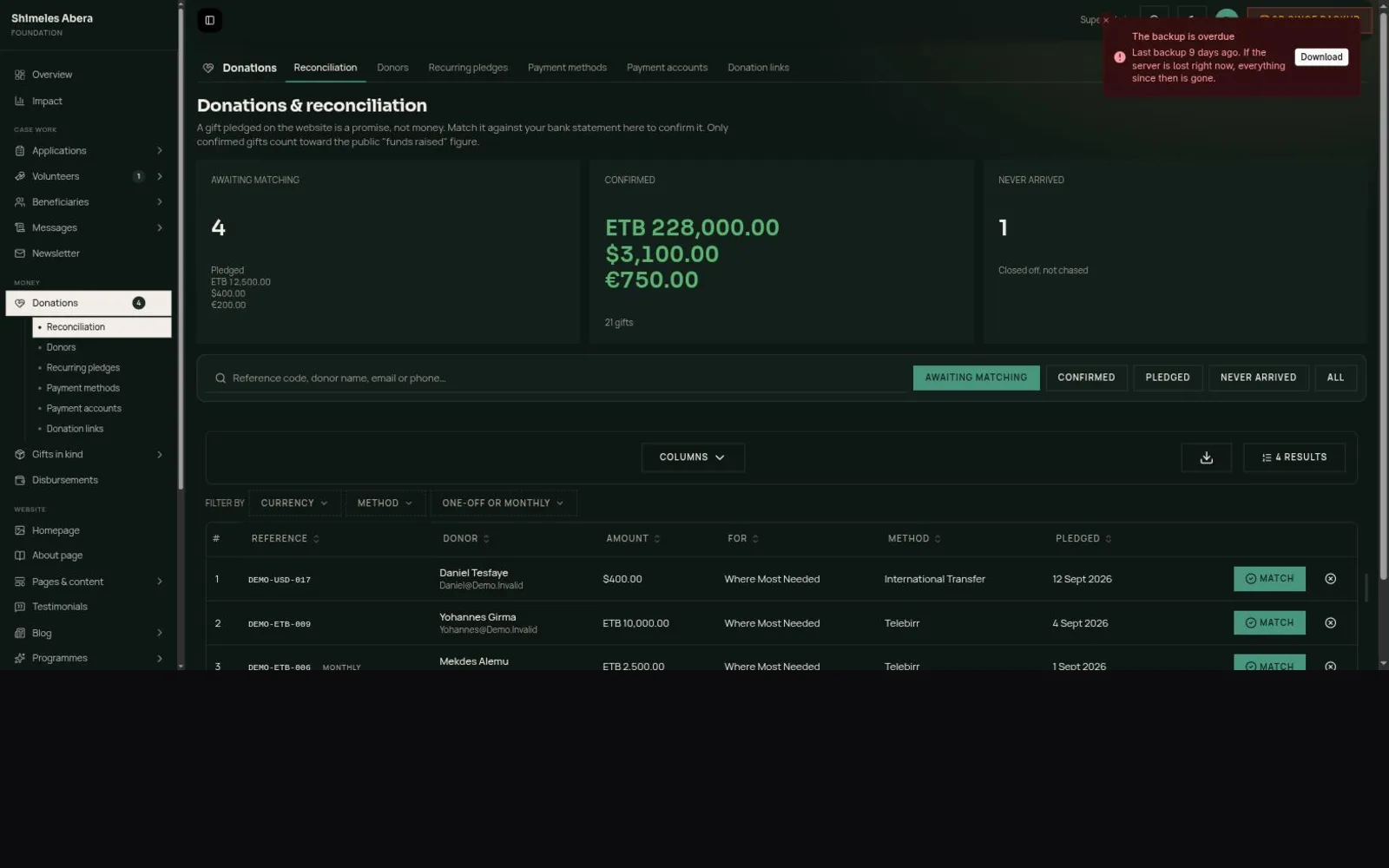
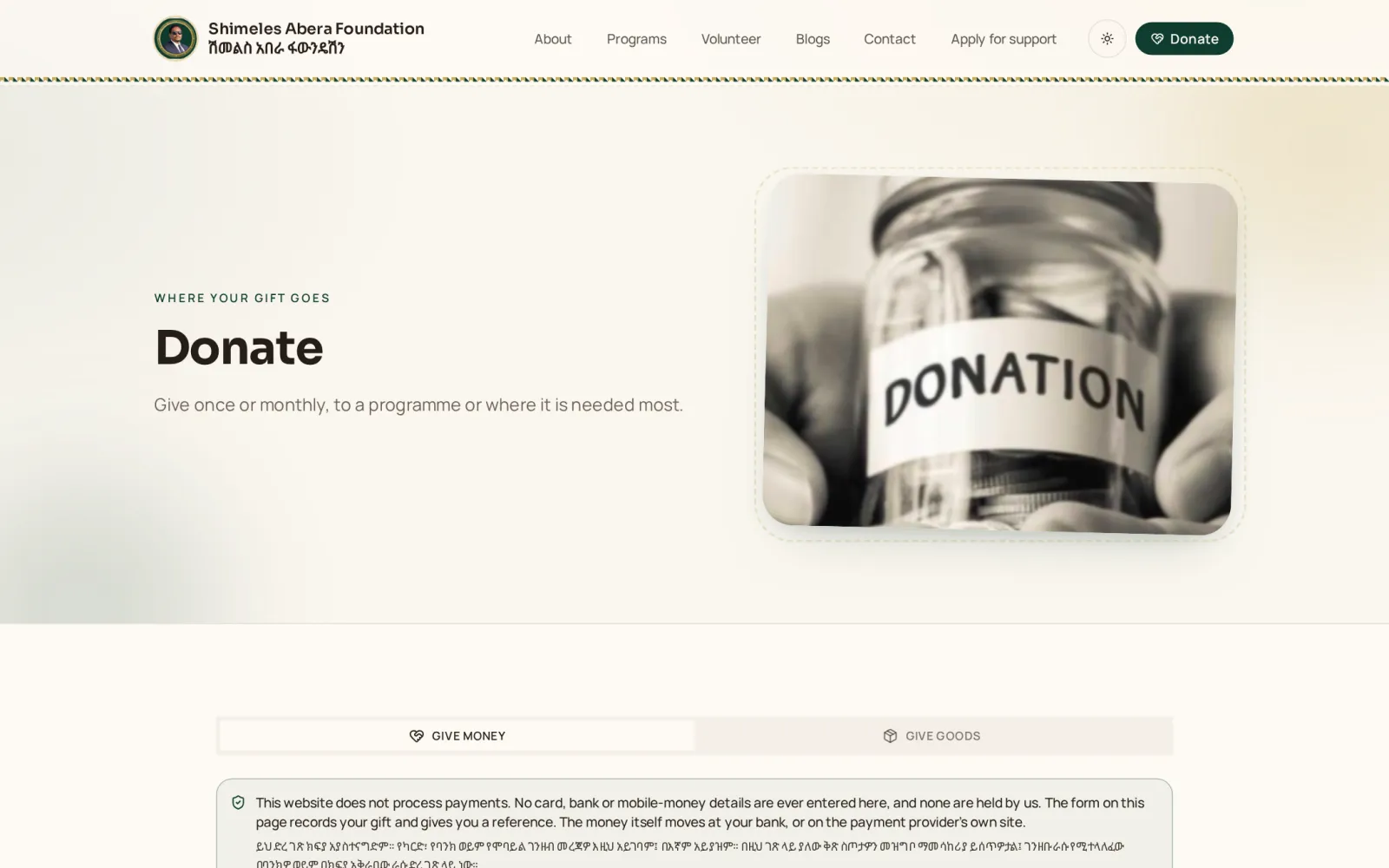
Donations. Campaigns, donors, one-off gifts, recurring pledges, in-kind donations with itemised contents and photographs, and a reconciliation log against the external giving platforms.
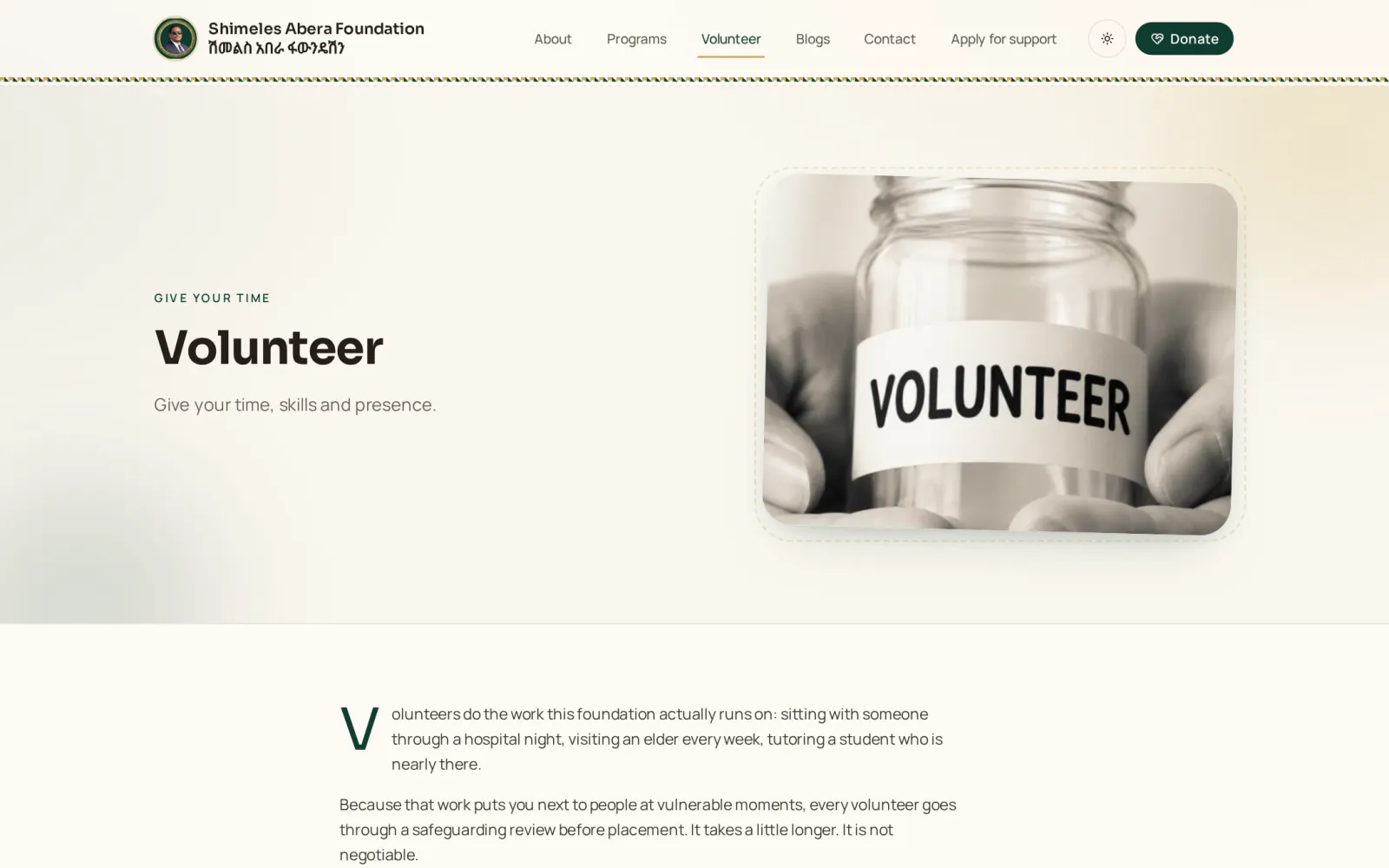
Volunteering, with a safeguarding gate. This one is deliberately not form-builder driven. Volunteering ends in someone being placed with vulnerable people, so the questions the gate depends on are code rather than editable rows: a coordinator deleting the references section would be disabling a control, not editing copy. A volunteer cannot reach an approved stage while the safeguarding checklist is incomplete, and that check lives in the single transition function every path goes through, precisely so a direct POST cannot skip it.
Pillar-scoped access. A caseworker assigned to one programme pillar must not reach another pillar's case notes or documents: not through the interface, not by changing a URL, not by posting directly. The scope is folded into the query rather than hidden in the UI.
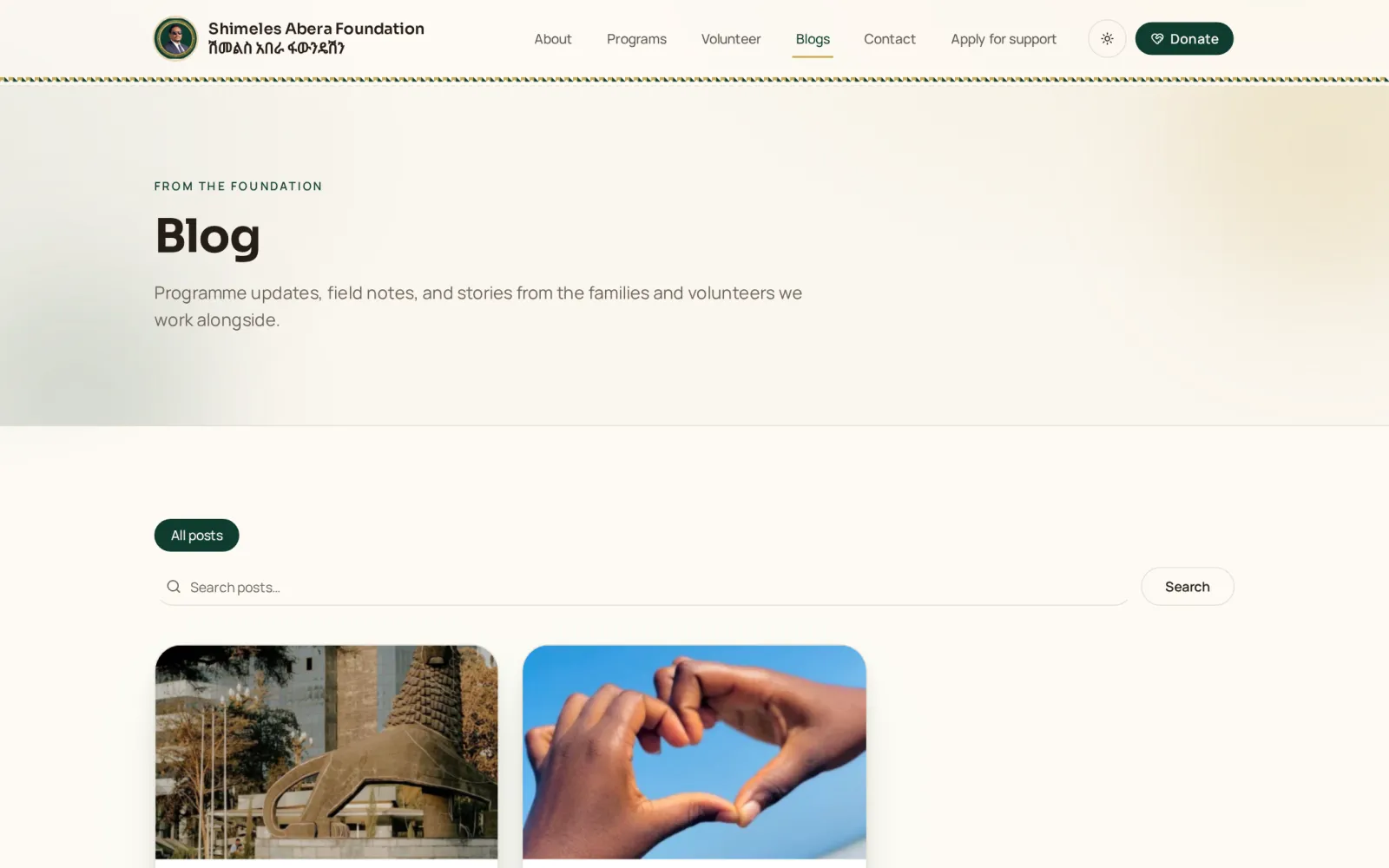
The rest. Blog, media library, testimonials, contact routing by subject and office, newsletter, an audit log over everything, and a cached impact-metrics layer for the public figures.
Why it matters
Most nonprofit websites are built once and then slowly become wrong, because every change costs a developer the organisation cannot afford. This one was built so the Foundation owns its own content, its own forms and its own workflow, and the developer is only needed when the shape of the work changes, not its wording.
How it was built
- Framework
SvelteKit
Server load functions, form actions and endpoints; SSR by default.
Svelte 5
Runes for reactivity ($state, $derived, $effect).
- Language
TypeScript
Strict mode across app and server code.
- Data
SQLite / libSQL
Primary datastore, embedded and file-backed.
Drizzle ORM
Typed schema and queries, with migrations generated from the schema.
Drizzle Kit
Committed SQL migrations rather than push-to-prod diffing.
- Auth
Better Auth
Session-based auth with server-side verification.
- Forms
Superforms
Progressive-enhancement forms with server-side validation.
Zod
One schema validating both client and server.
- UI
Tipex
Rich-text editor for CMS content.
Lucide
Icon set.
TanStack Table
Sorting, filtering and pagination for admin tables.
Bits UI
Headless primitives behind the component library.
Chart.js
Reporting charts.
Embla
Carousels.
Dark mode
System-aware theme switching.
Tailwind CSS
Utility-first styling with a project design token layer.
- Testing
Vitest
Unit tests over business logic.
- Infrastructure
Client image compression
Uploads compressed in the browser before hitting the server.
Nodemailer
Transactional email over SMTP.
Inside the system